
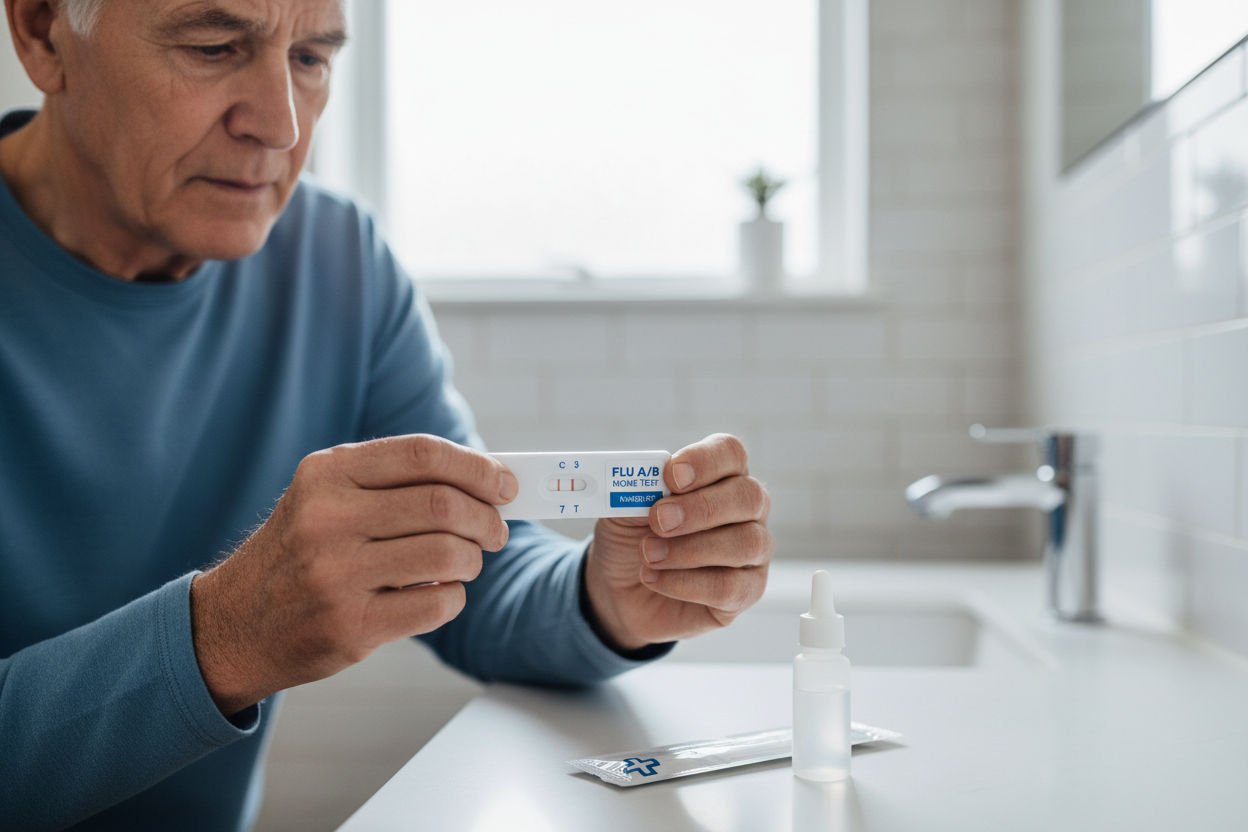
Influenza Test: Rapid Tests, Combo Tests & Where to Buy
Introduction: Why Influenza Testing Matters
During respiratory illness season—typically October through March in the Northern Hemisphere—millions of people experience symptoms like fever, cough, body aches, and fatigue. But here's the challenge: these symptoms overlap significantly with COVID-19, RSV (Respiratory Syncytial Virus), and the common cold. Without proper testing, it's almost impossible to know which virus is causing your symptoms.
An accurate influenza test isn't just about curiosity. Getting a confirmed diagnosis matters because:
- Treatment options: Antiviral medications like oseltamivir (Tamiflu) are most effective when started within 48 hours of symptom onset—but only for confirmed influenza
- Prevention: Knowing you have the flu helps you isolate from vulnerable family members (elderly, infants, immunocompromised individuals)
- Work/school decisions: Accurate diagnosis determines whether you should stay home and for how long
- Peace of mind: Ruling out COVID-19 or RSV reduces unnecessary anxiety
- Public health: Test data helps health authorities track influenza circulation patterns
If you're experiencing respiratory symptoms, our comprehensive guide to flu symptoms, duration and treatment provides additional medical information to help you understand your condition.
Types of Influenza Tests: Understanding Your Options
1. PCR Tests (Polymerase Chain Reaction)
What they are: PCR tests detect the genetic material (RNA) of the influenza virus in respiratory samples. They're considered the gold standard for influenza diagnosis.
How they work: A healthcare provider collects a nasal or throat swab, which is sent to a laboratory. The sample is processed using molecular testing equipment that amplifies and detects viral RNA.
Accuracy: 95-98% sensitivity and nearly 100% specificity for both Influenza A and B
Time to result: 24-48 hours (sometimes longer depending on lab capacity)
Where: Only performed at hospitals, medical clinics, or certified laboratories—not available for home testing
Cost: €50-150 (usually covered by health insurance in Germany with medical necessity)
2. Antigen Rapid Tests
What they are: Antigen tests detect proteins (antigens) on the surface of influenza virus particles. They're the rapid tests you can perform at home in 10-15 minutes.
How they work: A nasal swab sample is applied to a test cassette with special reactive chemicals. If influenza virus is present, colored lines appear—similar to a pregnancy test.
Accuracy: 70-85% sensitivity, 95-100% specificity. (Note: a negative antigen test doesn't completely rule out influenza, especially if symptoms are very recent)
Time to result: 10-15 minutes
Where: Available at pharmacies, drugstores, and online retailers; can be used at home
Cost: €1.49-8.00 per test (depending on product and quantity)
3. Combo Tests (3-in-1, 4-in-1, 5-in-1)
What they are: Modern combo tests detect multiple respiratory viruses from a single sample, simultaneously testing for influenza and other pathogens like COVID-19 and RSV.
Advantages of combo tests:
- Only need one nasal swab instead of three separate tests
- Get results for multiple pathogens in 10-15 minutes
- More cost-effective than buying separate tests
- Especially valuable during respiratory season when multiple viruses circulate
- Reduces uncertainty: even if you have a negative flu result, you might have COVID or RSV detected
Parahealth.de offers several combo test options that combine influenza detection with other respiratory viruses—detailed below in our product comparison section.
Combo Tests Explained: Why 4-in-1 and 5-in-1 Tests Are the Smart Choice
During fall and winter months, respiratory illness season brings a "perfect storm" of circulating viruses. Rather than playing guessing games with single-pathogen tests, combo tests provide comprehensive screening in one simple procedure.
How Combo Tests Work
A combo test uses a single nasal swab sample that's tested against multiple different antigens simultaneously:
Step 2: The sample is applied to a test cassette designed with multiple detection zones
Step 3: Each zone contains antibodies specific to a different virus (Influenza A, Influenza B, COVID-19 SARS-CoV-2, RSV, etc.)
Step 4: If a virus is present, a colored line appears in that specific zone within 10-15 minutes
What the Test Panel Covers
Different combo tests detect different pathogen combinations:
- 3-in-1: COVID-19 + Influenza A + Influenza B
- 4-in-1: COVID-19 + Influenza A + Influenza B + RSV (Respiratory Syncytial Virus)
- 5-in-1: SARS-CoV-2 + Influenza A + Influenza B + Adenovirus + RSV
Why Choose a Combo Test?
Symptom overlap problem: All these viruses cause similar symptoms (fever, cough, body aches, fatigue). A single-pathogen test might confirm influenza, but you won't know if you also have COVID-19 or RSV—which could matter for treatment decisions and quarantine duration.
Cost savings: A 4-in-1 combo test typically costs less than buying four separate tests.
Convenience: One swab, one test, four results. No need to repeat procedures.
Comprehensive safety: Especially important for people living with high-risk individuals (elderly parents, infants, immunocompromised family members). A combo test gives you complete clarity on what you're dealing with.
Insurance and timing: Some people find that combo tests offer better value than single tests, especially when buying in bulk for family use or workplace screening.
Influenza Test Products: Comprehensive Comparison
Parahealth.de carries five premium influenza and combo test options, all CE-certified and ready for immediate use:
| Product Name | Pathogens Detected | Sample Type | Time to Result | Specificity | CE Mark | Quantity |
|---|---|---|---|---|---|---|
| Fluorecare 4-in-1 Combo | COVID-19, Flu A/B, RSV | Nasal swab | 12 minutes | 100% | Yes | 1 test |
| CorDx 4-in-1 Combo | Corona, Flu A/B, RSV | Nasal swab | 15 minutes | High accuracy | Yes | 1 test |
| Medomics 5-in-1 | SARS-CoV-2, Flu A/B, Adenovirus, RSV | Nasal swab | 15 minutes | High accuracy | Yes | 1 test |
| SafeCare COVID-19 & Influenza A+B | COVID-19, Flu A/B | Nasal swab | 15 minutes | High accuracy | Yes (CE2934) | 1 test |
| HighTop RSV & Influenza A/B + Corona 4-in-1 | RSV, Flu A/B, Corona | Nasal swab | 15 minutes | High accuracy | Yes | 20 pieces (bulk) |
Bulk buying option: The HighTop 20-piece bulk pack is ideal for families, workplaces, schools, or care facilities needing multiple tests for the season. This significantly reduces the per-test cost compared to buying individual tests.
How to Perform a Flu Rapid Test at Home: Step-by-Step Guide
What You'll Need
- Unopened rapid test kit
- Clean tissues
- A timer or clock (most tests are 10-15 minutes)
- Good lighting
- Flat, clean surface to read test results
Preparation (Before Testing)
2. Gather supplies and arrange them on a clean surface where you can work comfortably.
3. Check the test kit for damage or expiration date. Do not use expired tests.
4. Blow your nose gently with a tissue to clear nasal passages, then dispose of the tissue.
5. Allow at least 30 minutes after eating, drinking, or using nasal spray before testing for most accurate results.
Sample Collection (The Nasal Swab)
2. Tilt your head back slightly to open nasal passages, or sit upright with a good view of your nose in a mirror.
3. Insert the swab gently into one nostril to a depth of about 2-3 cm (approximately to the point where the nostril becomes narrow). You should feel slight resistance but no pain. If it hurts, you've inserted it too deep—withdraw slightly.
4. Rotate the swab gently 5-10 times in a circular motion, pressing slightly against the nasal wall. This ensures adequate sample collection. The entire process should take 10-15 seconds per nostril.
5. Repeat in the other nostril using the same swab (do not switch swabs unless instructed otherwise by your test kit).
6. Withdraw carefully and do not touch the swab tip.
Test Application
2. Insert the swab into the sample well and immediately close the vial if one is provided. Many tests include a small tube with extraction buffer (liquid).
3. Stir the swab in the extraction liquid for 10-15 seconds, pressing the swab head against the tube wall several times to release the viral particles.
4. Apply the sample by squeezing 2-3 drops of the liquid extract onto the sample well (labeled "S" or "C" depending on the test brand).
5. Place the test cassette flat on a clean, dry surface and do not move it.
Reading Results (Timing is Critical)
At 10-15 minutes (check your specific test instructions), read results. Reading too early may give false negatives; reading too late may cause color bleeding.
Interpret the lines:
- Control line (C) only: Negative result (no influenza detected)
- Control line + Flu A line: Positive for Influenza A
- Control line + Flu B line: Positive for Influenza B
- Control line + both Flu A and Flu B lines: Co-infection (both types present—rare but possible)
- For combo tests: Read each pathogen zone separately (COVID, Flu A, Flu B, RSV, etc.)
- No control line visible: Invalid test—result cannot be interpreted
Take a photo of your result for your records, especially if you plan to discuss with a healthcare provider.
After Testing
2. Wash hands thoroughly with soap and warm water for at least 20 seconds.
3. Document your result with the date and time, especially if you're tracking symptoms or communicating with a doctor.
Where to Buy Influenza Tests: Pharmacy vs. Drugstore vs. Online
Option 1: Local Pharmacy (Apotheke)
Advantages:
- Expert consultation from trained pharmacists
- Can verify you have a legitimate, certified product
- Immediate availability (no waiting for shipping)
- Some pharmacies offer supervised testing services
Disadvantages:
- Limited product selection—usually only 2-3 options
- Higher prices (typically €5-8 per individual test)
- Inconvenient hours or location for some people
- Cannot compare prices easily
- Smaller packages (individual tests only, no bulk pricing)
Search term: "Influenza test apotheke" or "Grippe test apotheke"
Option 2: Drugstores (dm & Rossmann)
Advantages:
- Readily available during respiratory season
- Slightly lower prices than traditional pharmacies (€3-6 per test)
- Convenient locations and extended hours
- No prescription needed
Disadvantages:
- Even more limited product variety (often just 1-2 brands)
- Inventory can be depleted during peak season
- No expert guidance available—cashiers are not trained pharmacists
- Still no bulk pricing advantages
- May not carry premium combo tests like Fluorecare or Medomics
Search terms: "Influenza test Rossmann" or "Grippe test dm"
Option 3: Online Retailers (Parahealth.de)
Advantages:
- Largest selection: All five premium combo test options available in one place
- Best pricing: Competitive rates, especially for bulk purchases (HighTop 20-pack saves 30-50% per test)
- Product comparison: Detailed specifications and side-by-side comparison table to choose exactly what you need
- Fast shipping: Order today, receive within 1-2 business days in Germany
- Privacy: Discreet packaging—no judgment at checkout
- Bulk convenience: Stock tests for your family, workplace, or season
- Verified CE certification: All products verified as legitimate medical devices
- Expert information: Articles and guides to help you choose the right test
Disadvantages:
- Requires internet access and shipping time (minimal drawback given 1-2 day delivery in Germany)
The Parahealth.de Advantage
For comprehensive influenza testing solutions, Parahealth.de offers unbeatable value:
- Premium combo tests like the Fluorecare 4-in-1 (with 100% specificity, 12-minute result) and Medomics 5-in-1 (5 pathogens in one test)
- Bulk options like the HighTop 20-piece pack for families, workplaces, or winter season preparedness
- Value tests like SafeCare COVID-19 & Influenza combo for budget-conscious shoppers
- Educational content to help you understand test types, results, and when to test
- Fast, reliable delivery to your door within Germany
When to Test for Influenza: Timing and Symptoms
The 48-Hour Window for Antiviral Treatment
If you're considering antiviral medication (oseltamivir/Tamiflu), timing is critical. These medications are most effective when started within 48 hours of symptom onset. This means:
If you have respiratory symptoms that could be influenza, test as soon as possible—ideally within 24-48 hours of when symptoms first appeared. Once you confirm the diagnosis with a rapid test, you can immediately contact your doctor to discuss antiviral treatment options.
Symptoms That Warrant Testing
If you experience any of these symptoms, consider testing:
- Sudden fever (typically 38-39°C / 100-103°F), often higher than with a cold
- Dry cough (usually appears 1-2 days after fever)
- Body aches or myalgia (legs, back, joints)
- Severe fatigue or malaise—feeling exhausted beyond normal tiredness
- Headache (often severe)
- Chills accompanying fever
- Sore throat (less common than with cold)
- Nasal congestion (though less prominent than with cold)
For detailed information on distinguishing flu from common cold symptoms, duration, and treatment approaches, see our complete flu symptoms guide.
Who Should Test Immediately?
Certain groups should prioritize testing if they suspect influenza:
- High-risk individuals: Adults over 65, pregnant women, people with chronic medical conditions
- Healthcare workers: Because of occupational exposure and risk to patients
- Parents of infants: Children under 5 are at high risk for severe complications
- Caregivers for elderly: To prevent transmission to vulnerable individuals
- People with worsening symptoms: Fever lasting 5+ days, shortness of breath, severe chest pain warrant immediate medical evaluation
Asymptomatic Testing
If you've been exposed to someone with confirmed influenza but have no symptoms yet, testing is not recommended. Most tests have very low sensitivity in pre-symptomatic individuals. If symptoms develop (usually 1-4 days after exposure), test then.
Understanding Your Results: Positive, Negative, and Invalid
Positive Result for Influenza A or B
What it means: You have influenza infection. The test detected influenza virus antigens in your nasal sample.
What to do:
- Isolate: Stay home for at least 5-7 days, preferably until fever-free for 24 hours without medications
- Contact your doctor: Discuss whether antiviral medications are appropriate (timing within 48 hours of symptom onset is crucial)
- Notify close contacts: People you've been in close contact with in the last 48 hours should be aware of your diagnosis
- Monitor symptoms: Most cases improve in 7-14 days, but seek immediate medical attention if you develop shortness of breath, confusion, or persistent chest pain
- For combo tests: Check if you also tested positive for COVID-19 or RSV—this affects quarantine duration and treatment options
Important: A positive antigen test is considered sufficient for diagnosis in most clinical contexts. You don't necessarily need a confirmatory PCR test unless you're in a high-risk category or have an unusual clinical presentation.
Negative Result
What it means: The test did not detect influenza virus antigens in your nasal sample at the time of testing.
Important caveats:
- Test timing: Antigen tests have lower sensitivity in the very early phase of illness (first 24 hours of symptoms). If you tested too early, the result might be falsely negative.
- Sampling technique: If the nasal swab wasn't inserted deep enough or didn't collect adequate secretions, you might get a false negative despite actual infection
- Not zero risk: Antigen rapid tests are 70-85% sensitive, meaning 15-30% of actual influenza cases are missed
- Clinical judgment: If your symptoms are strongly suggestive of influenza and you tested negative, your doctor might recommend PCR testing or empirical antiviral treatment
What to do:
- If your symptoms persist and intensify, retest in 24-48 hours when viral load is typically higher
- For combo tests, note which other pathogens you tested positive or negative for
- Continue supportive care: rest, fluids, fever management
- If you suspect you were tested too early in illness, consider PCR testing through your doctor
Invalid Result
What it means: The test control line didn't appear, or the result can't be reliably interpreted.
Possible causes:
- Insufficient sample collected
- Test was expired or damaged
- Improper test procedure or timing
- Test left in extreme temperatures before use
What to do:
- Do not attempt to interpret an invalid result
- Repeat the test with a fresh kit
- Carefully review the instructions for proper technique
- If you consistently get invalid results, contact the test manufacturer or speak with a pharmacist
Influenza A vs. B: What's the Difference?
Both Influenza A and B viruses cause respiratory illness, but they have important differences:
Influenza A
- Frequency: Causes most seasonal epidemics and pandemics
- Severity: Often causes more severe illness and higher mortality rates
- Variants: Multiple strains circulate globally; causes annual seasonal flu in the Northern Hemisphere
- Transmission: Highly contagious; spreads rapidly through populations
- Strains of concern: H1N1 and H3N2 are the primary human-circulating strains
Influenza B
- Frequency: Causes smaller, more localized outbreaks
- Severity: Generally causes milder illness than A, but serious cases still occur
- Variants: Less genetic diversity; primarily Victoria and Yamagata lineages
- Transmission: Less contagious than Influenza A but still spreads efficiently
- Duration: Symptoms may last slightly longer than with Type A
Do the Differences Matter for Treatment?
For antiviral medications: Oseltamivir (Tamiflu) is effective against both A and B. The type you have doesn't change the treatment recommendation.
For vaccination: The seasonal flu vaccine protects against circulating strains of both A and B.
For prognosis: Both can cause severe illness and complications in high-risk groups. However, statistically, Influenza A tends to be associated with more severe outcomes.
For practical purposes: From a patient perspective, knowing whether you have A or B doesn't significantly change your management strategy—focus on isolation, supportive care, and symptom monitoring regardless of type.
Frequently Asked Questions About Influenza Testing
A: Prices vary significantly by retailer:
- Pharmacy: €5-8 per test
- Drugstore (dm/Rossmann): €3-6 per test
- Online (Parahealth.de): €1.49-5.00 per test depending on product and quantity
- Bulk discount: HighTop 20-pack reduces cost to approximately €0.75-1.50 per test
A: Yes. Influenza rapid tests are available over-the-counter in Germany without requiring a doctor's prescription. You can purchase them at any pharmacy, drugstore, or online retailer. No medical authorization is needed.
A: Yes, dm typically stocks rapid tests during respiratory season (October-March). However, selection is limited—usually just 1-3 brands available. For better selection and pricing, Parahealth.de offers more options including premium combo tests.
A: Yes, Rossmann carries rapid tests seasonally. Similar to dm, availability and variety are limited during peak season. Online purchase at Parahealth.de ensures you always have stock available with fast delivery.
A: Antigen rapid tests are approximately 70-85% sensitive (they correctly identify 70-85% of people who actually have influenza) and 95-100% specific (they correctly identify 95-100% of people who don't have influenza). This means:
- A positive result is highly reliable (95%+ chance you truly have influenza)
- A negative result is less definitive (5-30% chance of false negative)
A: Most rapid tests deliver results in 10-15 minutes:
- Fluorecare 4-in-1: 12 minutes
- CorDx 4-in-1: 15 minutes
- Medomics 5-in-1: 15 minutes
- SafeCare Combo: 15 minutes
- HighTop 4-in-1: 15 minutes
A: Yes, absolutely. Rapid antigen tests and combo tests are designed specifically for home use. They're self-tests that don't require medical training. Simply follow the included instructions for nasal swab collection and result reading. Our step-by-step guide earlier in this article walks through the entire process.
A: Yes, important differences:
- Cold: Caused by many different viruses (rhinovirus, adenovirus, coronavirus, etc.). A general "cold test" doesn't exist for all these pathogens.
- Flu (influenza): Caused by specific influenza A or B viruses. Rapid tests specifically detect these.
- Symptoms overlap: Both cause cough, congestion, sore throat, fatigue, but influenza is more likely to cause high fever, severe body aches, and sudden onset
- Practical approach: If you have severe symptoms with fever, use an influenza rapid test or combo test to rule in/out flu. This guides treatment decisions (antivirals, isolation duration, etc.)
A: RSV (Respiratory Syncytial Virus) is a common respiratory virus that causes symptoms nearly identical to influenza—fever, cough, body aches, and fatigue. It's particularly dangerous for infants and elderly people. Should you buy a combo test with RSV detection? Yes, if:
- You live with infants or elderly adults (RSV is particularly dangerous for them)
- You work in healthcare or childcare (RSV spreads rapidly)
- You want comprehensive respiratory virus screening
- The price difference between 3-in-1 and 4-in-1 tests is minimal
Conclusion: Making Influenza Testing Simple and Accessible
Influenza testing has become easier, faster, and more accessible than ever. Modern rapid antigen tests and combo tests deliver results in 10-15 minutes from home, eliminating the need for lab visits and days-long waiting periods.
Key takeaways:
- Accurate diagnosis matters—it guides treatment decisions, isolation periods, and risk assessment
- Combo tests (4-in-1, 5-in-1) are the smart choice during respiratory season—one swab, multiple pathogen detection
- Parahealth.de offers the widest selection at the best prices, including premium options like Fluorecare 4-in-1 and bulk options like HighTop 20-pack
- Testing within 48 hours of symptom onset is critical if you're considering antiviral treatment
- Follow proper nasal swab technique for accurate results
- A positive result requires isolation and medical consultation; a negative result doesn't completely rule out influenza
Ready to test? Choose your perfect flu test from Parahealth.de:
For more information about flu symptoms, duration, and treatment approaches, visit our comprehensive flu symptoms guide.
Questions? Parahealth.de is here to help you navigate respiratory virus testing with clarity and confidence. Fast shipping, verified CE-certified products, and educational resources to support your health decisions.
DEUTSCH / GERMAN SECTION BELOW
═════════════════════════════════════════════════════════════


Commenta
Nota che i commenti devono essere approvati prima di essere pubblicati.
Questo sito è protetto da hCaptcha e applica le Norme sulla privacy e i Termini di servizio di hCaptcha.